From Grain to Glass

Five steps.
Six summers.

No shortcuts. The process is older than the brand — older than the country. The distillery just doesn't get in its way.

Step 01 / Grain

Sourced within 200 miles.

All grains are sourced regionally and milled fresh on site:

GrainOriginPurpose
CornKentucky and IndianaBody and sweetness
Soft Red Winter WheatKentucky/Indiana regionSoftness on the palate
RyeNorth DakotaStructure and spice
Two-Row Malted BarleyRegionalEnzymatic conversion

The mash bill composition is 70% corn, 14% rye, 10% wheat, and 6% malted barley. Each grain earns its place in the blend: corn for body and sweetness, rye for spine, wheat for softness, and malted barley to enzymatically wake up the rest. The tight sourcing radius ensures grain freshness and quality control from field to mill.
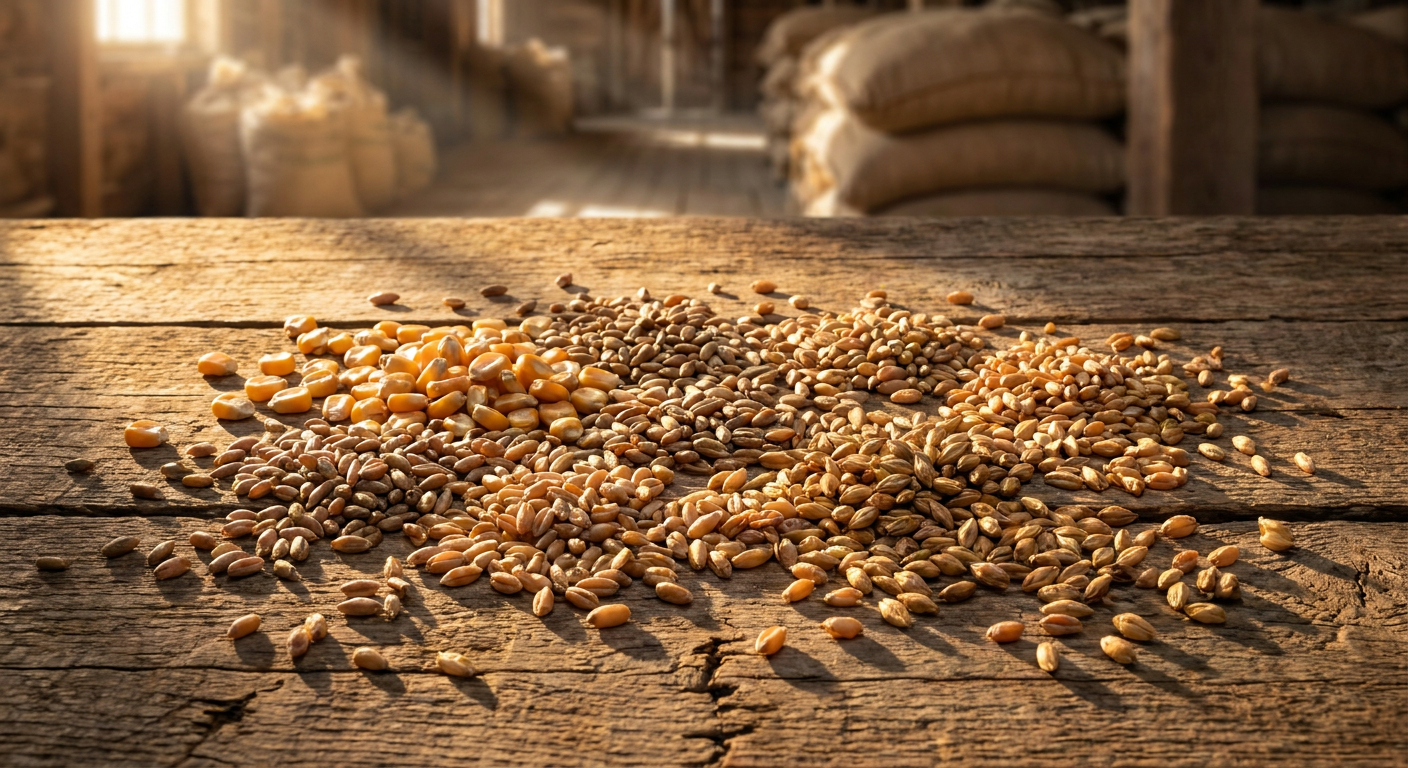
Grain
Step 02 / Mash

Cooked low. Held longer.

The four-grain bill is sweet-mashed in iron-rich Kentucky limestone water drawn from the local aquifer. Limestone water is the defining ingredient of Kentucky bourbon country — it naturally filters through limestone shelf, stripping iron and concentrating calcium and magnesium that drive fermentation. The mineral character of the water is essential to the spirit's final profile.

“The water is half the bourbon.”

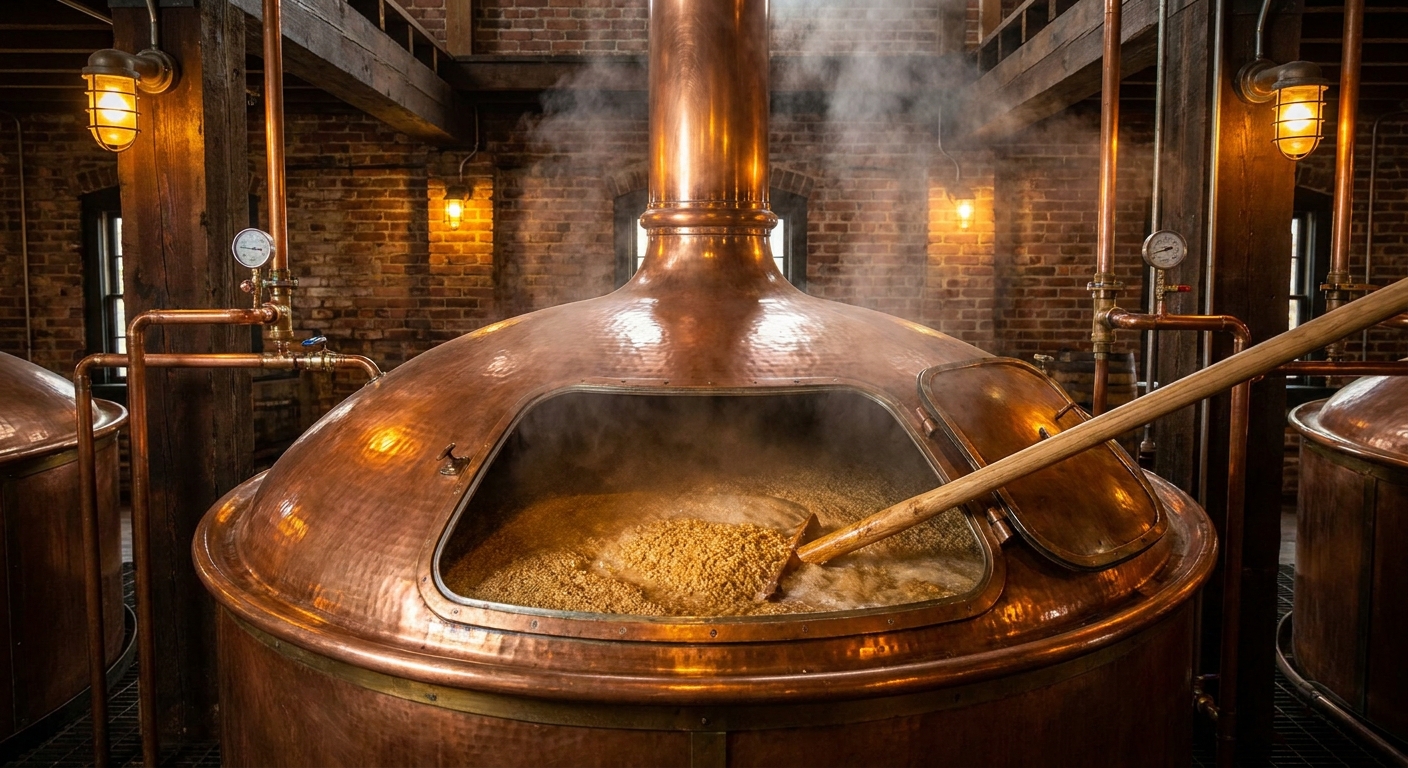
The mash is cooked low and held longer than standard production schedules, a deliberate patience that allows the starches to fully convert and the grains to yield their complete flavor profile.

Mash tun
Step 03 / Ferment

Open-top, four full days.

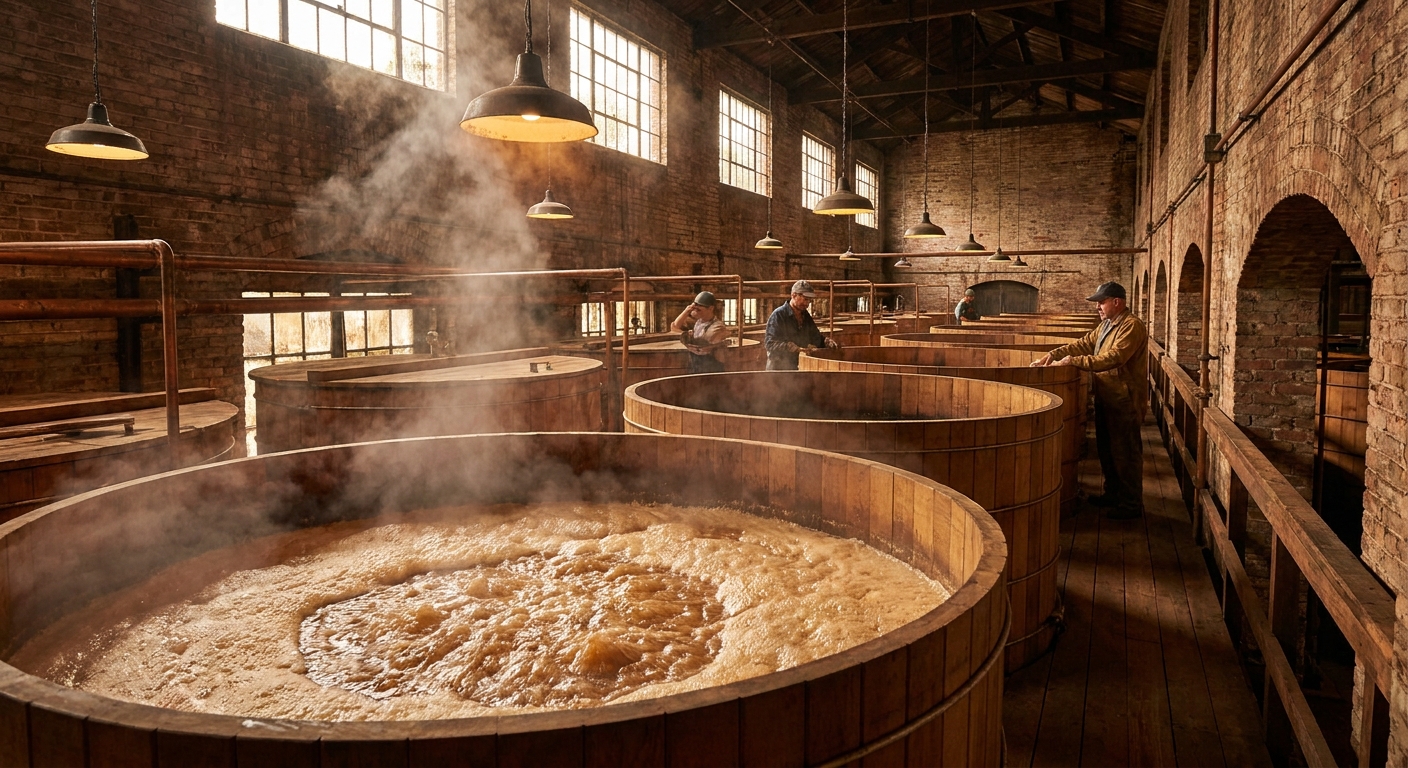
Fermentation takes place in cypress fermenters — traditional wood vessels that allow the fermenting mash to breathe and develop character that stainless steel cannot replicate. A proprietary yeast strain, selected and maintained by the distillery, drives the fermentation over four full days.

The open-top design and extended duration give time for ester development that shortcuts and rapid fermentations simply cannot produce. This is where the fruit and floral notes in the final whiskey begin to form.

Fermentation
Step 04 / Distill

Copper column. Doubler finish.

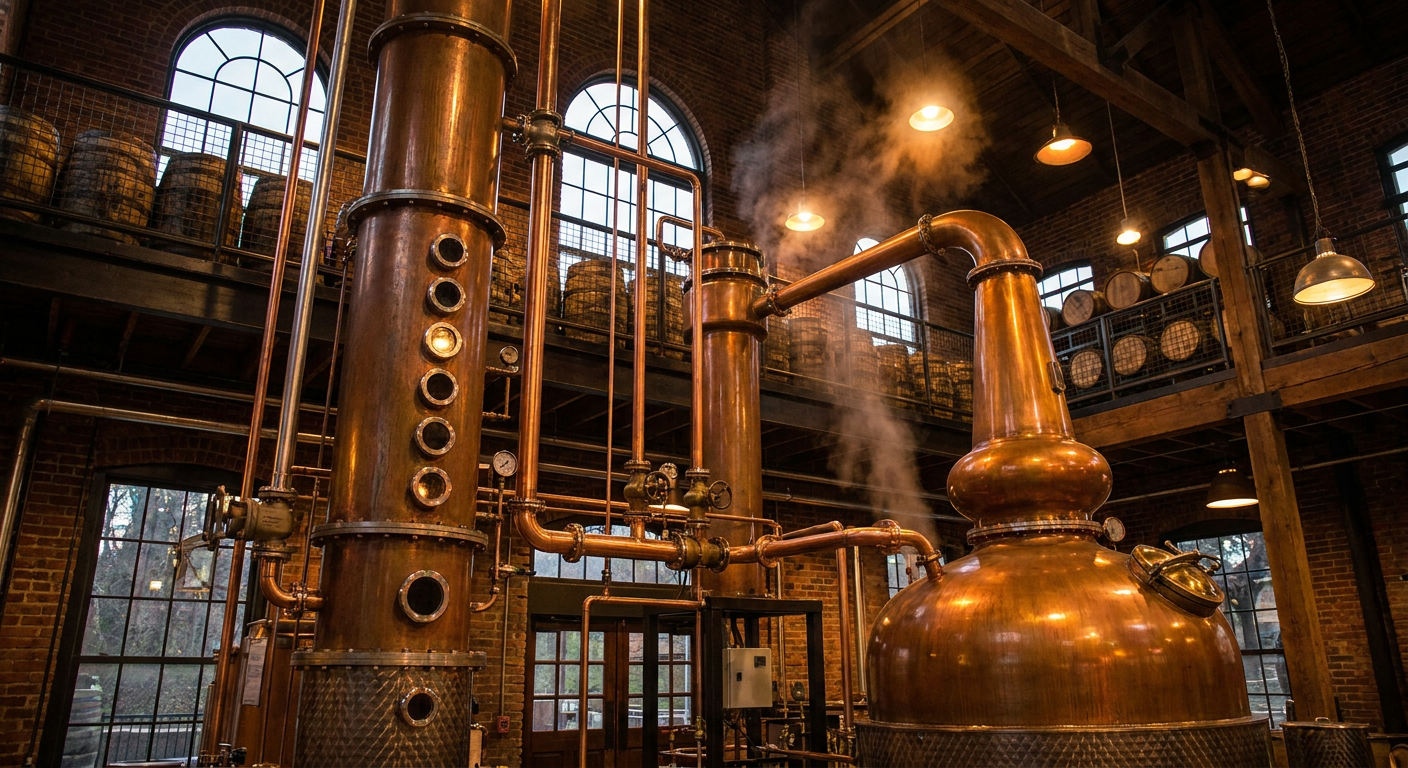
Winchester Bourbon is distilled twice:

  1. The column — A continuous copper column still performs the first distillation, separating the alcohol from the solids and producing a high-proof spirit.
  2. The doubler — The second pass goes through a copper doubler (a pot-style still), which refines the spirit, adds copper contact for sulfur removal, and builds body.

Cuts — the separation of heads, hearts, and tails — are made by hand, by nose, by the master distiller. No automation replaces the sensory judgment of knowing where the good spirit begins and where it ends.

Stills / copper
Step 05 / Age

Charred new oak. Six Kentucky summers.

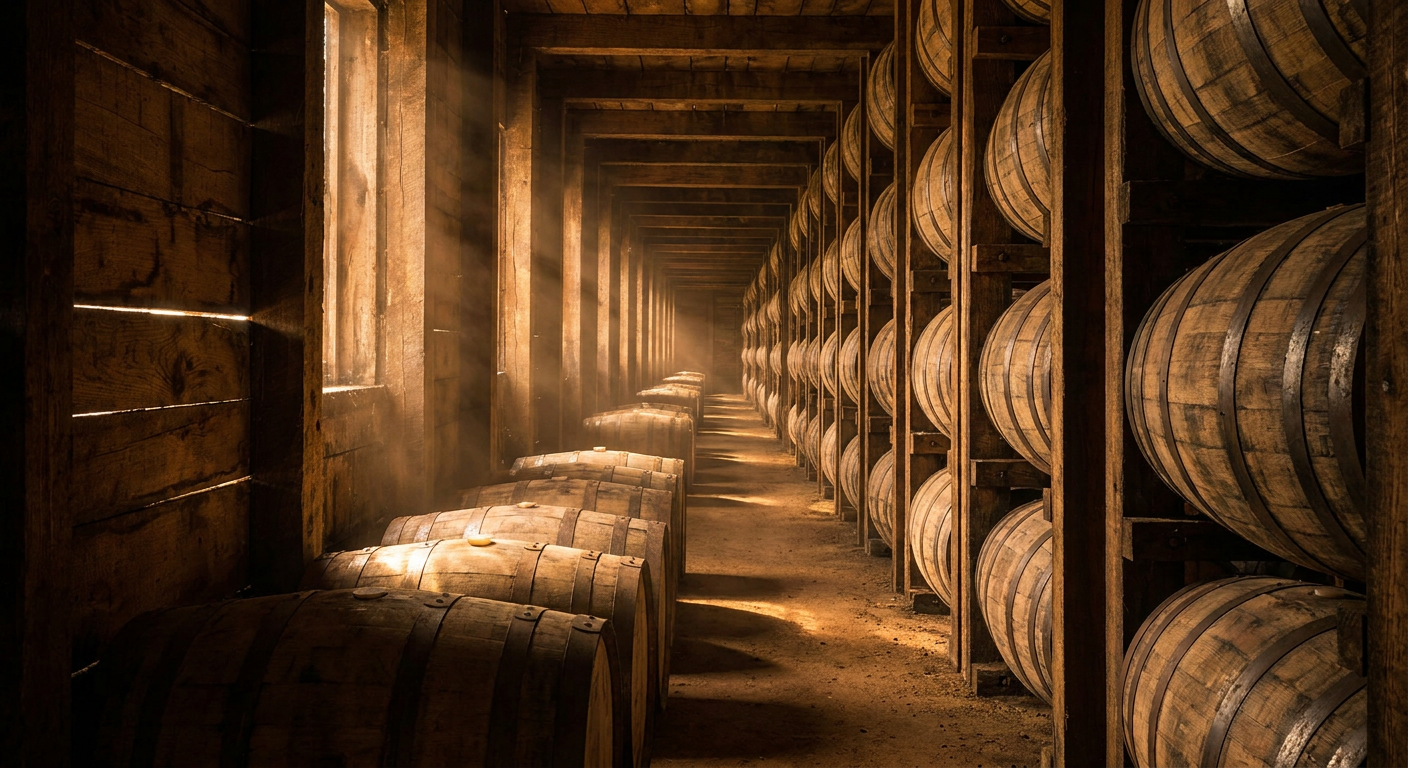
The distilled spirit enters new, charred American white oak barrels — the only type of barrel legally permitted for Kentucky Straight Bourbon. The barrels are stored in a rickhouse in Bardstown, where they endure the full cycle of Kentucky seasons.

  • Summer heat drives the spirit deep into the wood, extracting vanillin, caramelized sugars, and toasted oak compounds.
  • Winter cold pulls the spirit back out of the wood, concentrating and filtering it through the char layer.
  • This cycling — in and out of the barrel staves — repeats season after season.
“Heat cycles the spirit through the wood. Cold pulls it back. The barrel breathes. We wait.”

The Kentucky Straight expression rests long enough that the barrel does the work. The Double Oaked expression is barreled a second time in a fresh char-3 barrel, adding a deeper layer of caramelized oak and a long, slow finish.

Rickhouse
Process at a Glance

The timeline of
a great bourbon.

Grain
Regional sourcing, fresh milled · Continuous
Mash
KY limestone water, low-and-slow · Several hours
Ferment
Open-top cypress, proprietary yeast · 4 days
Distill
Copper column + doubler, hand-cut · Per batch
Age
New charred American white oak · 6+ years

Ready to taste
the patience?

Six summers in the rickhouse. One name, one promise, kept.

Explore our bourbon